I Didn’t Know NBA Games Could Get Any Better
When I was a kid I spent a lot of time playing video games with family and friends. The graphics and gameplay drastically improved every single year. In many instances, people thought I was watching a live game, and were shocked to find out I was playing sports video games like NBA 2K or Madden NFL. Video games are so realistic that people can’t tell the difference.
However, video games always had the upper hand on showing data and visualizations on the screen. For example, NBA 2k will give you a shot meter to tell you the probability of the shot going in, or when you are running a play, each player is guided to complete their positioning and actions in the play.

NBA 2K19 Gameplay
Now the tables are turning. Videos games are starting to look more like real life with a stronger emphasis on using data and visualizations in the game. Instead real NBA games on national television are injecting some of the same features that are thought to be seen in video games, but in real time.
A few days ago I was in my room checking out a few different NBA games on my iPad. I came across the Los Angeles Lakers vs. New Orleans Pelicans game via ESPN3. When I started to watch the game, I immediately noticed that there were real-time data overlays on the screen that immerse you into a live set like never before. I began to investigate what this new feature was doing on my screen and it took a few minutes to realize all its capabilities.
ESPN is delivering a new and special broadcast called Full Court Press - Second Spectrum. According to ESPN Media Zone, Second Spectrum enables new and compelling content and experiences through interactive applications and augmented video that helps media, teams, and fans visualize and add context to stories about the game.
The Full Court Press - Second Spectrum presentation featured 3 different viewing modes: Coach mode, Player mode, and Mascot mode. Each mode has its own flavor to it, and this enables the viewer a choice to watch the game in the experience of their liking.
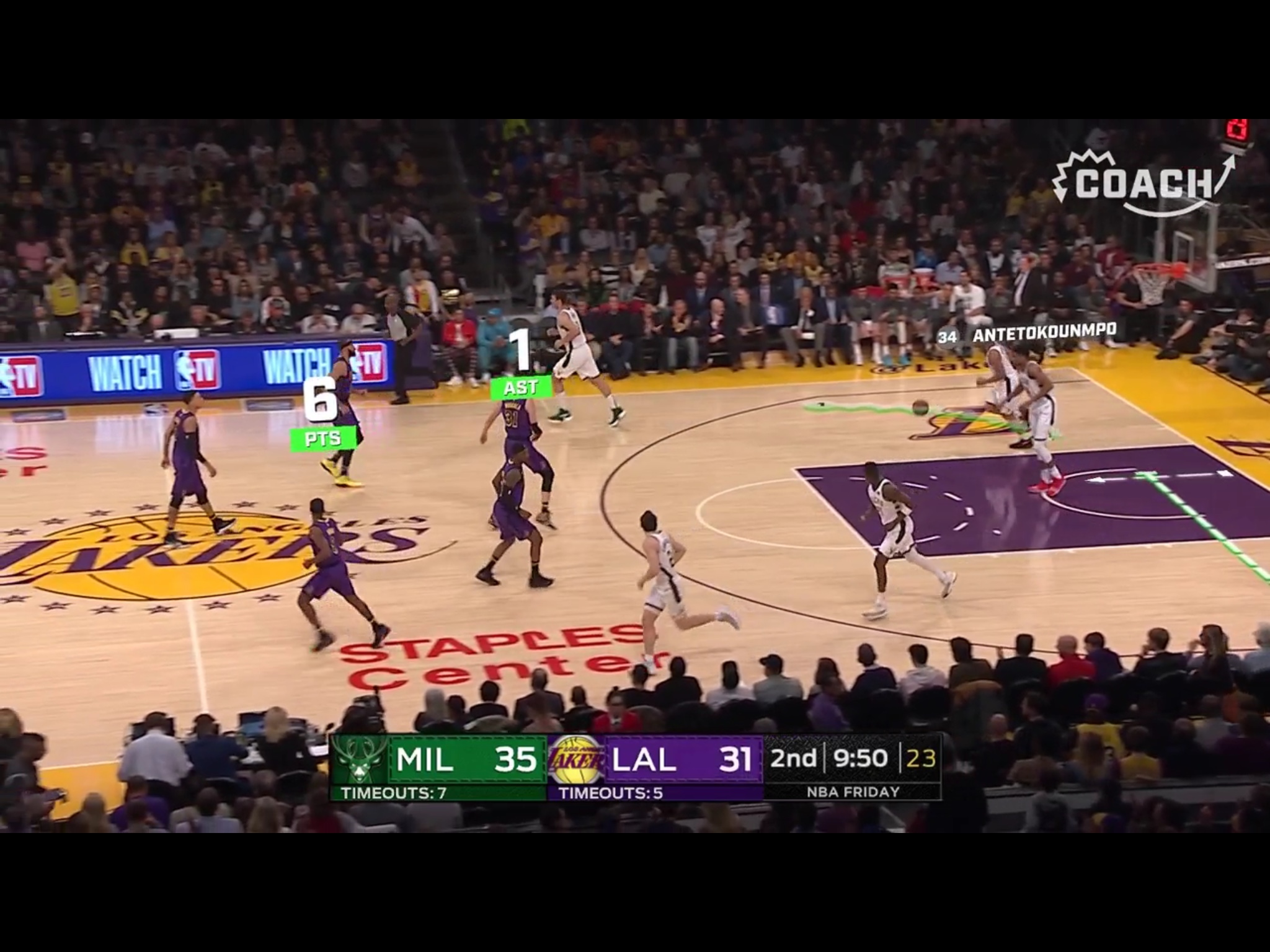
Coach mode is a full X's and O's analytical presentation of the game with on-court diagrams as if you are watching the coach draw up a play on a whiteboard.
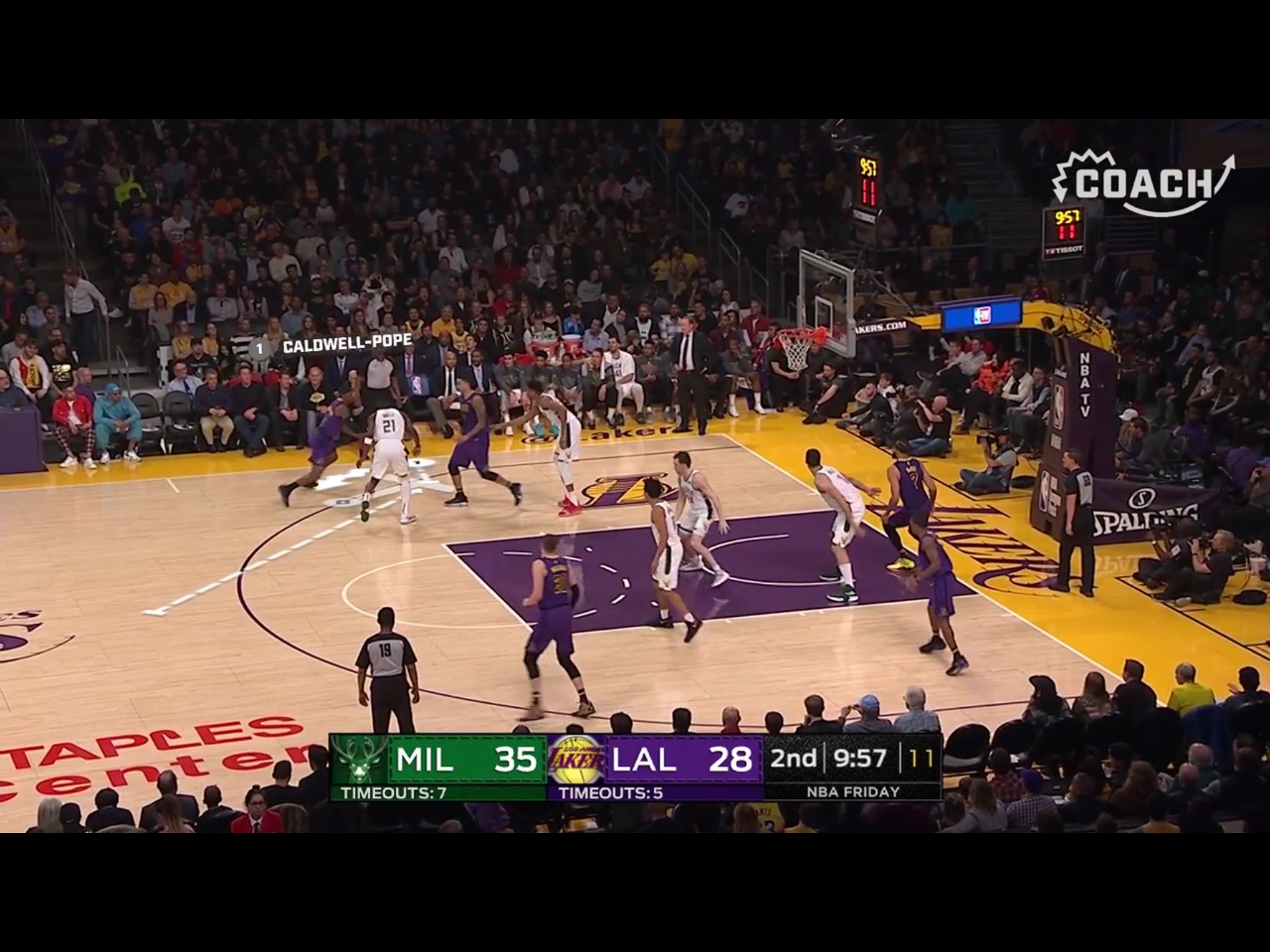
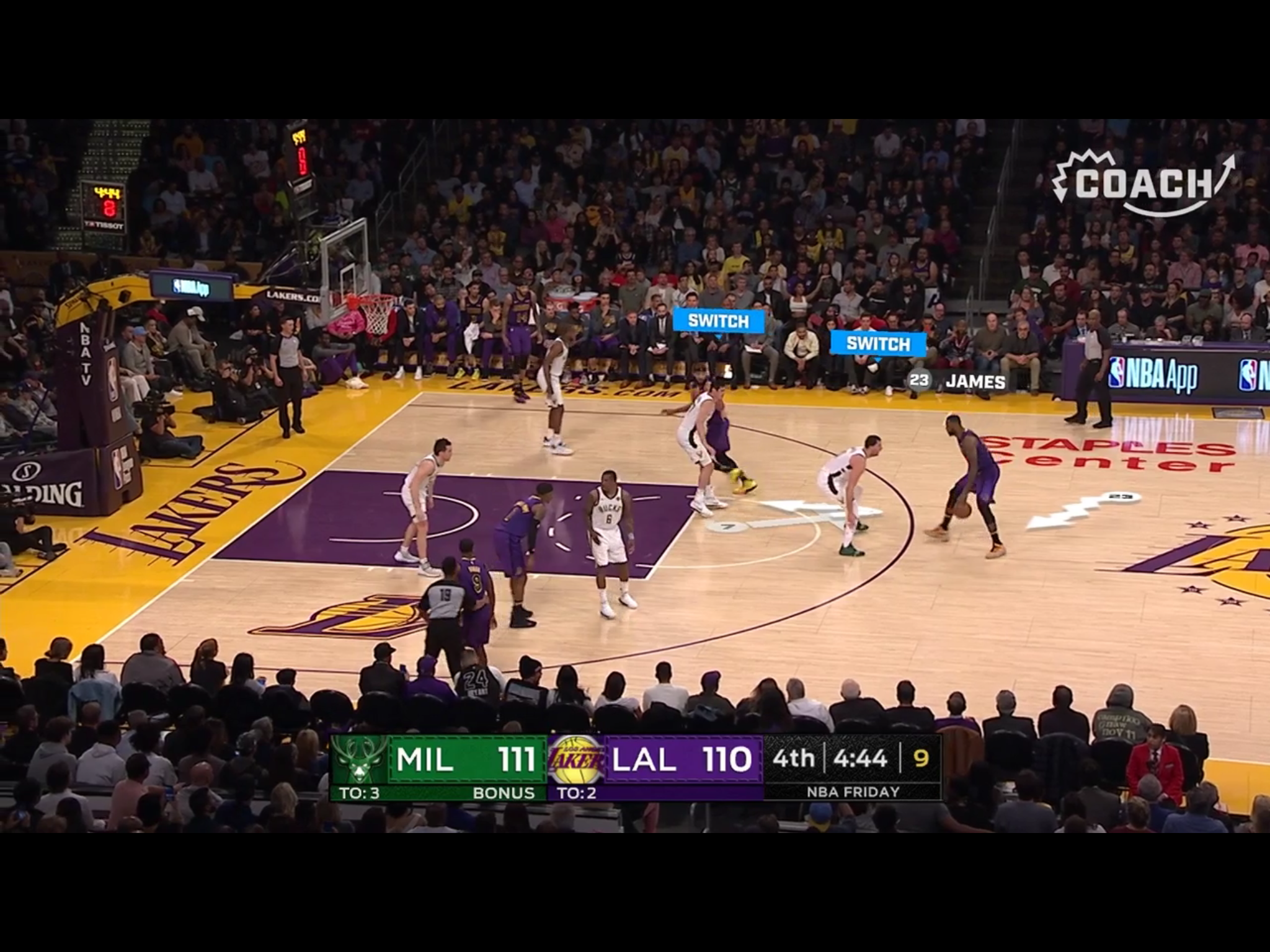
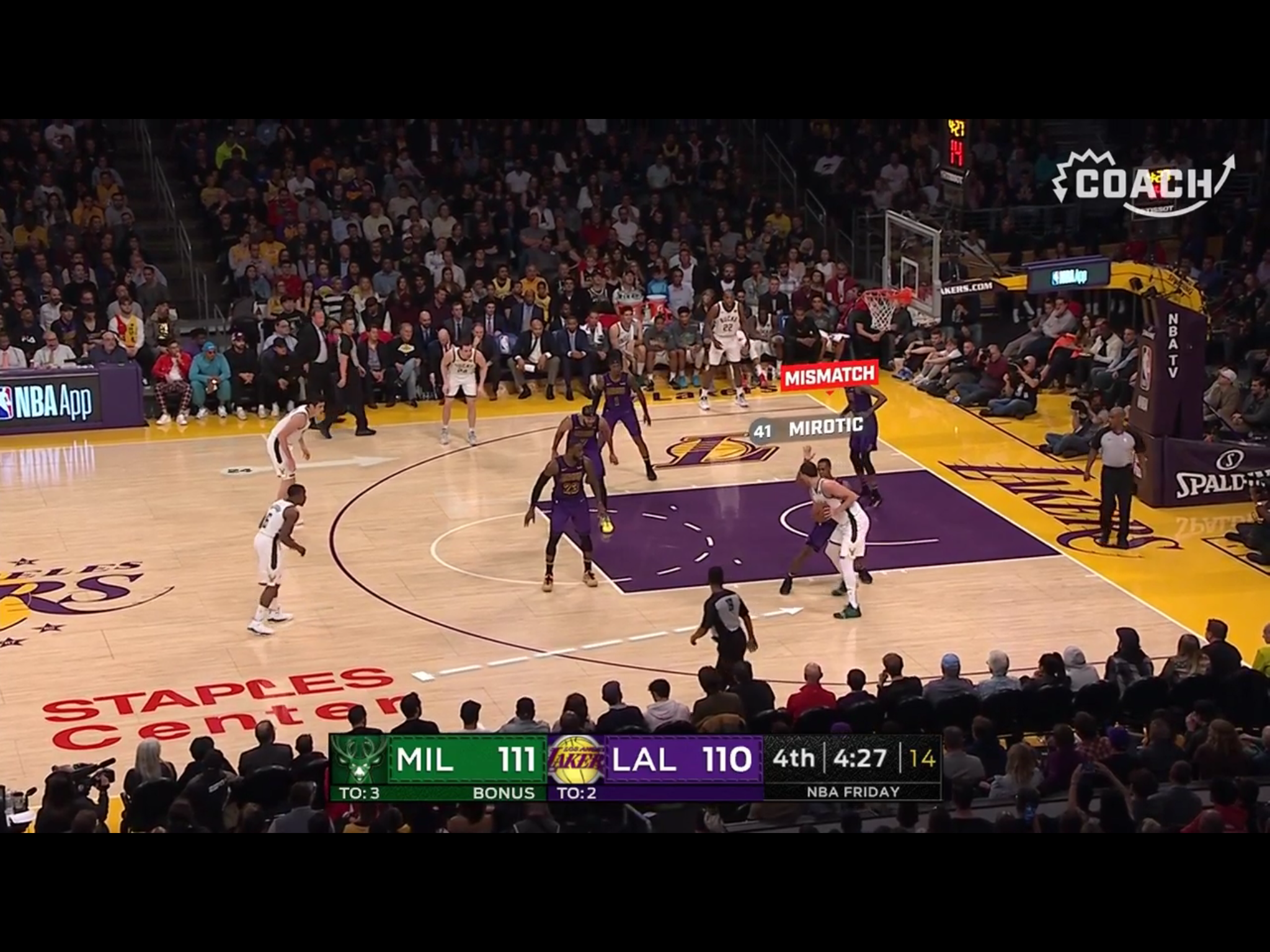
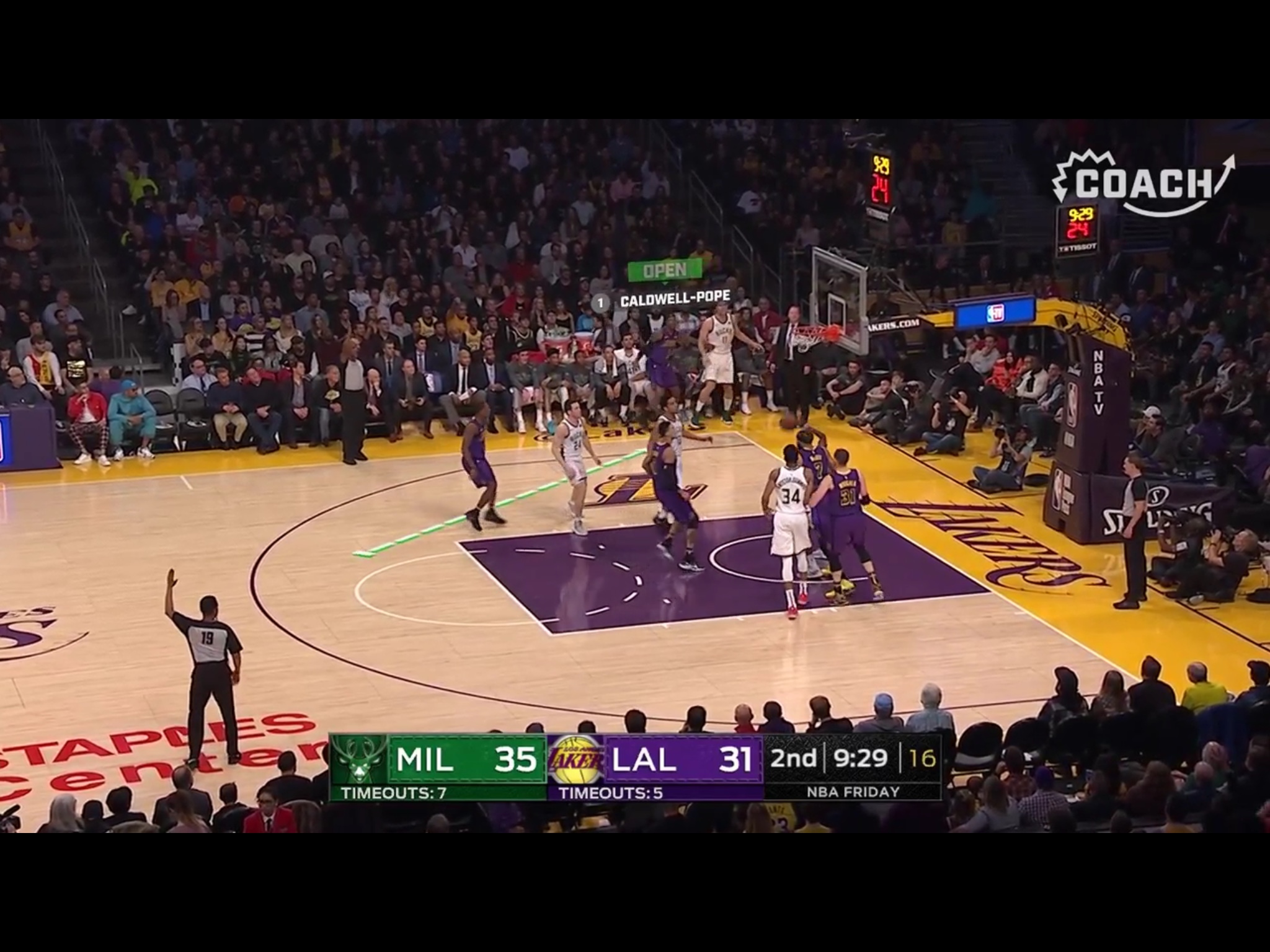
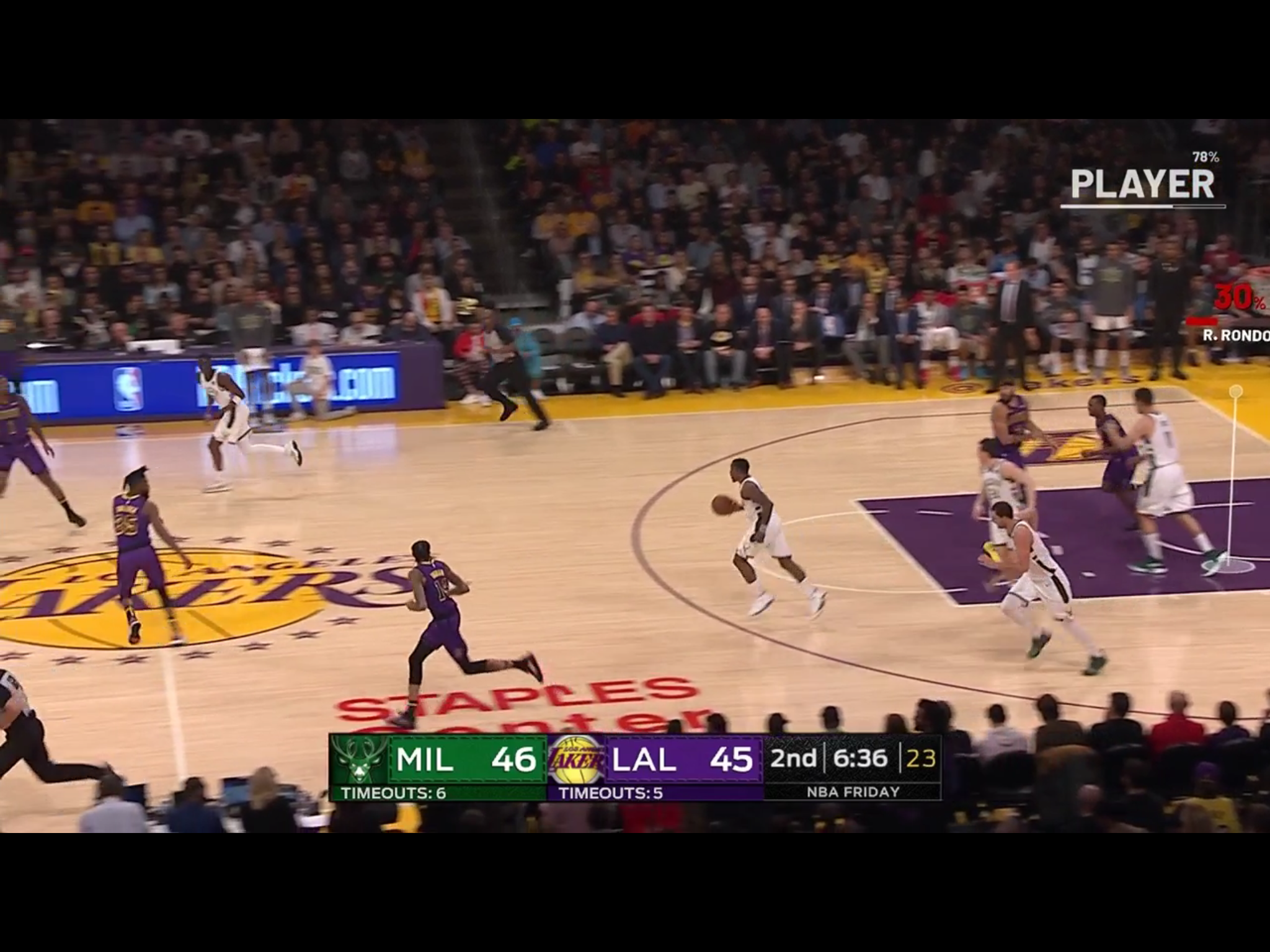
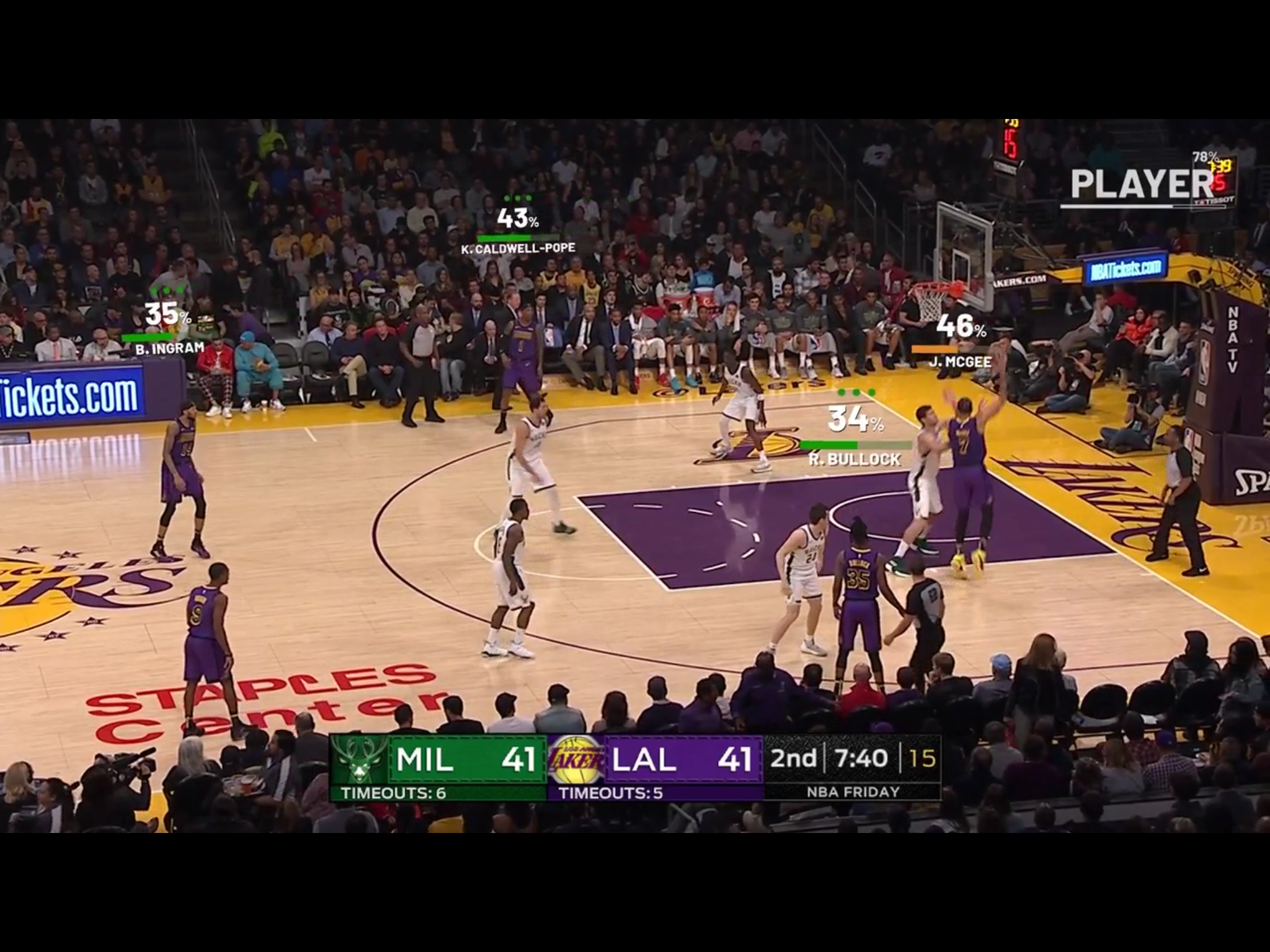
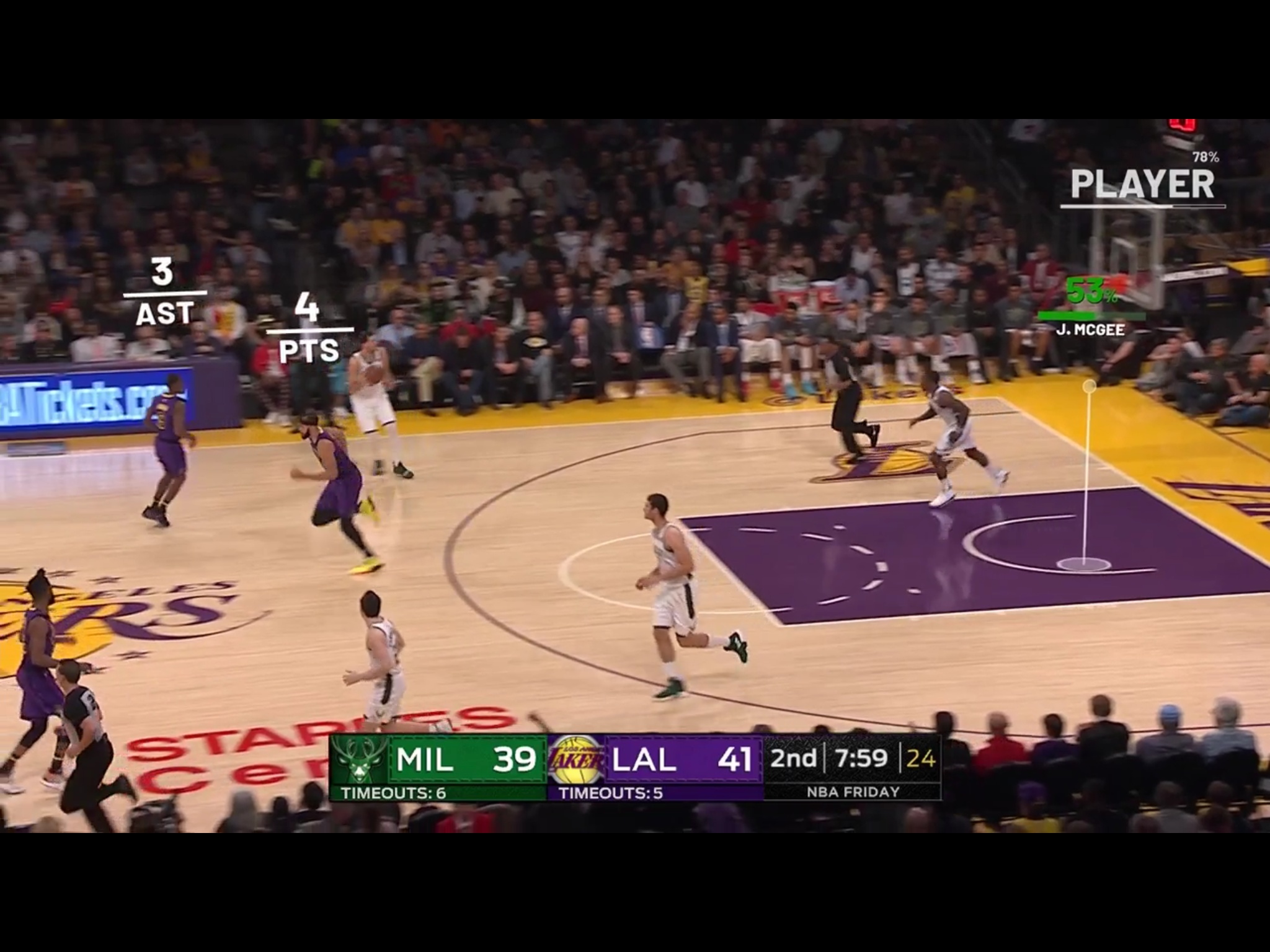
Player mode features the scoring probability of the five offensive players on the court and throughout the offensive possession the data overlay changes in real-time.
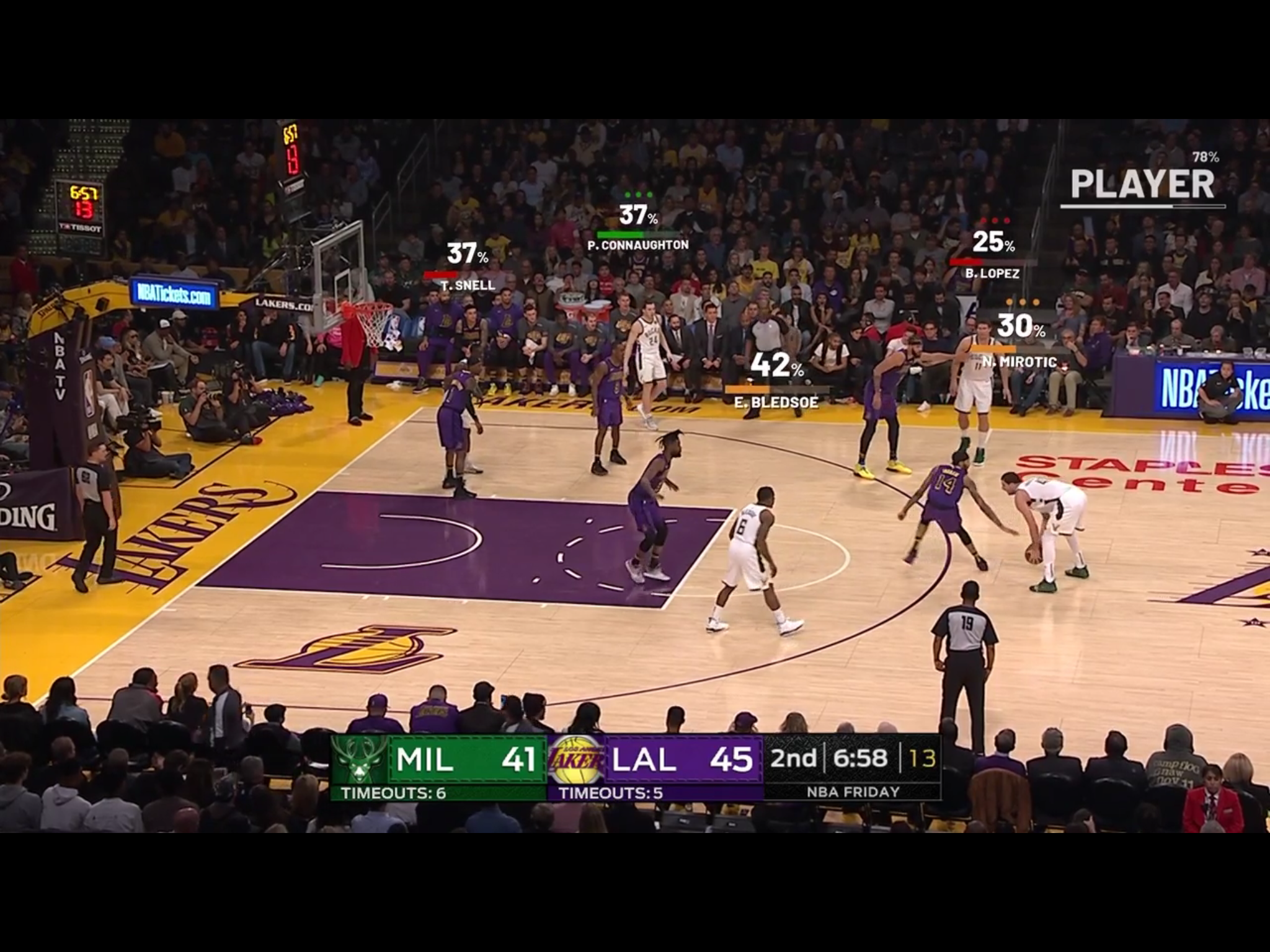
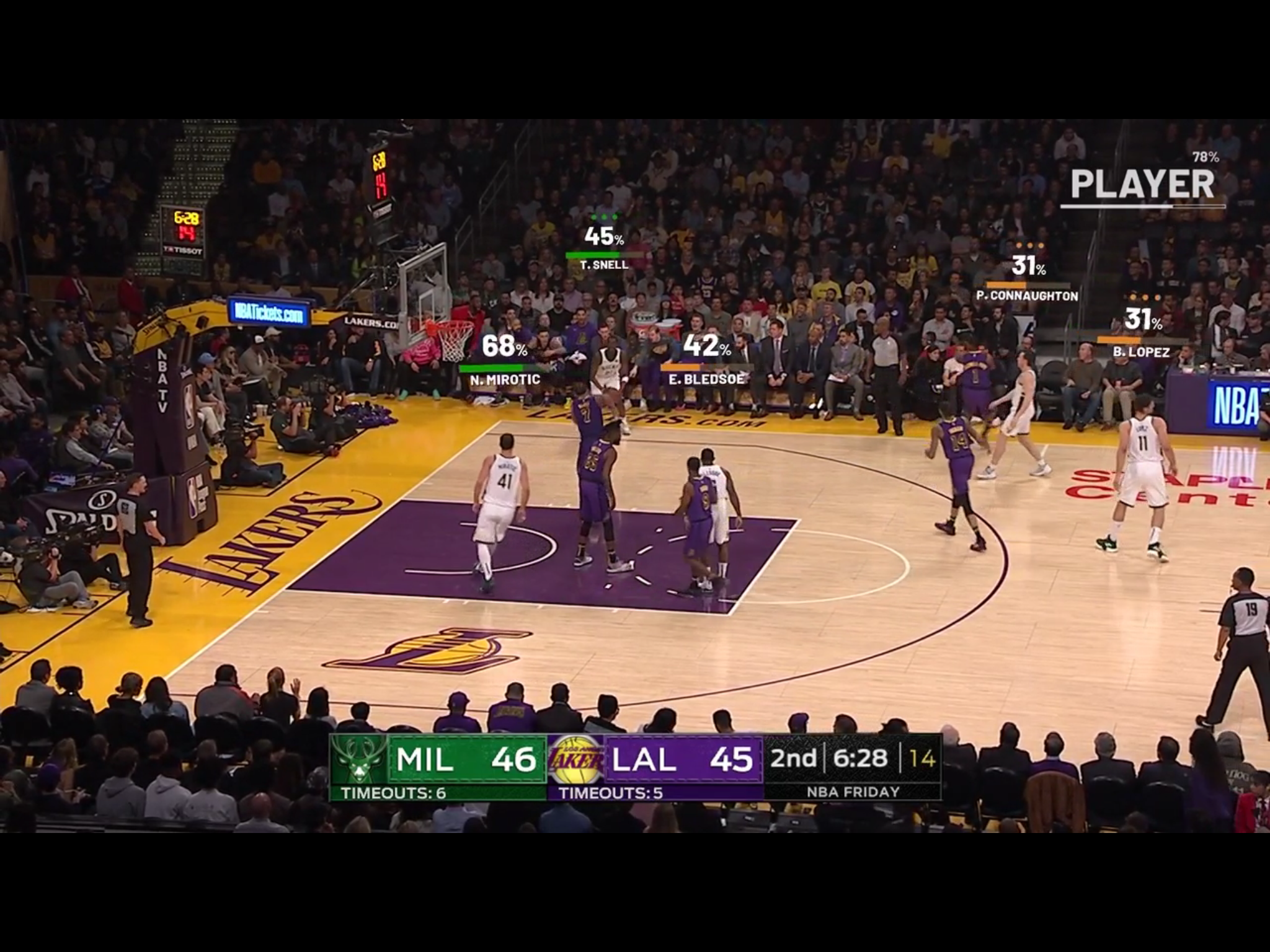
Mascot mode is the most fun and entertaining presentation of them all. It features unique fire graphics when the team is on a long scoring streak , a 3D brick may appear if a player misses a shot and many more interesting overlays on the court.
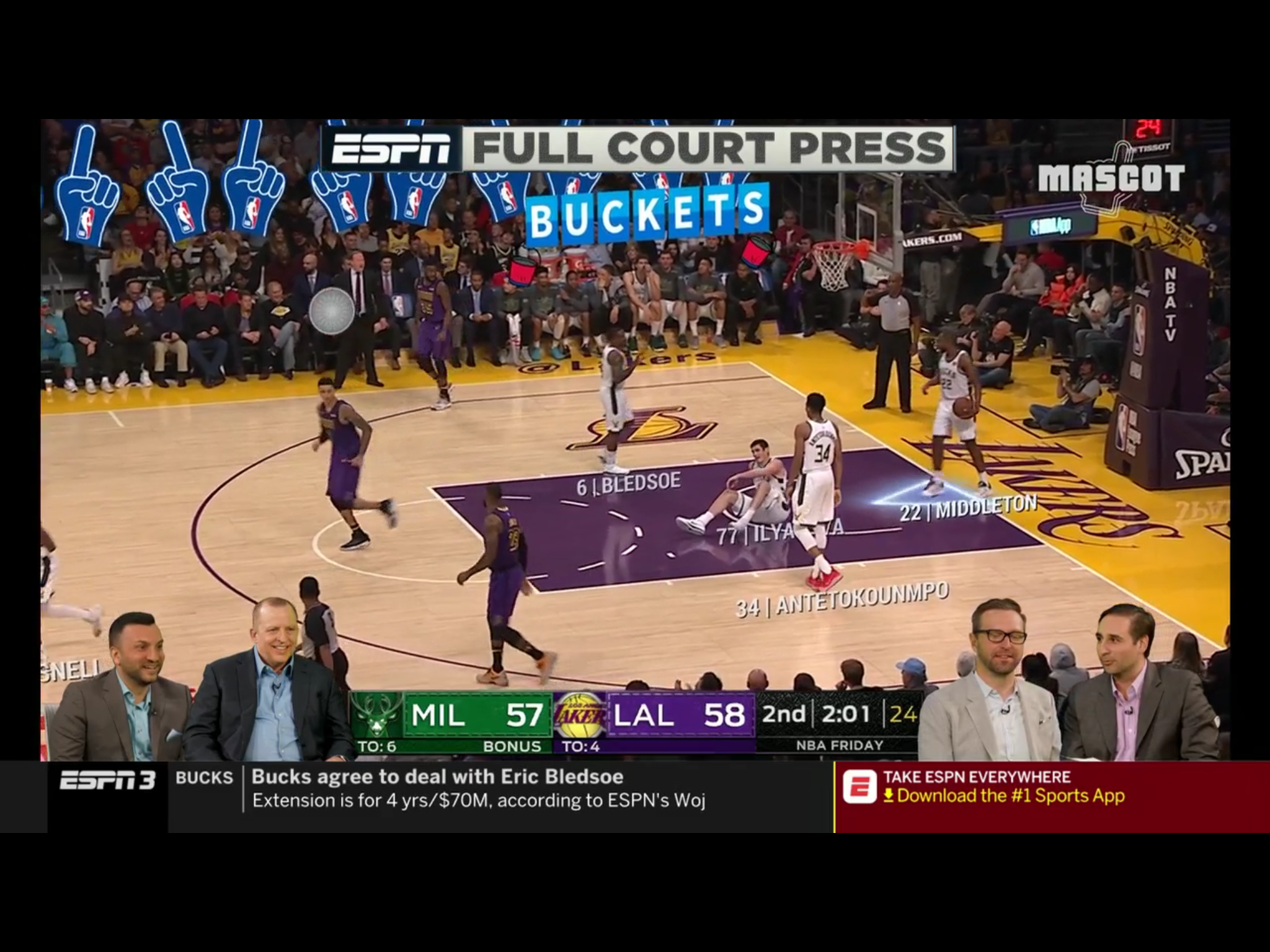
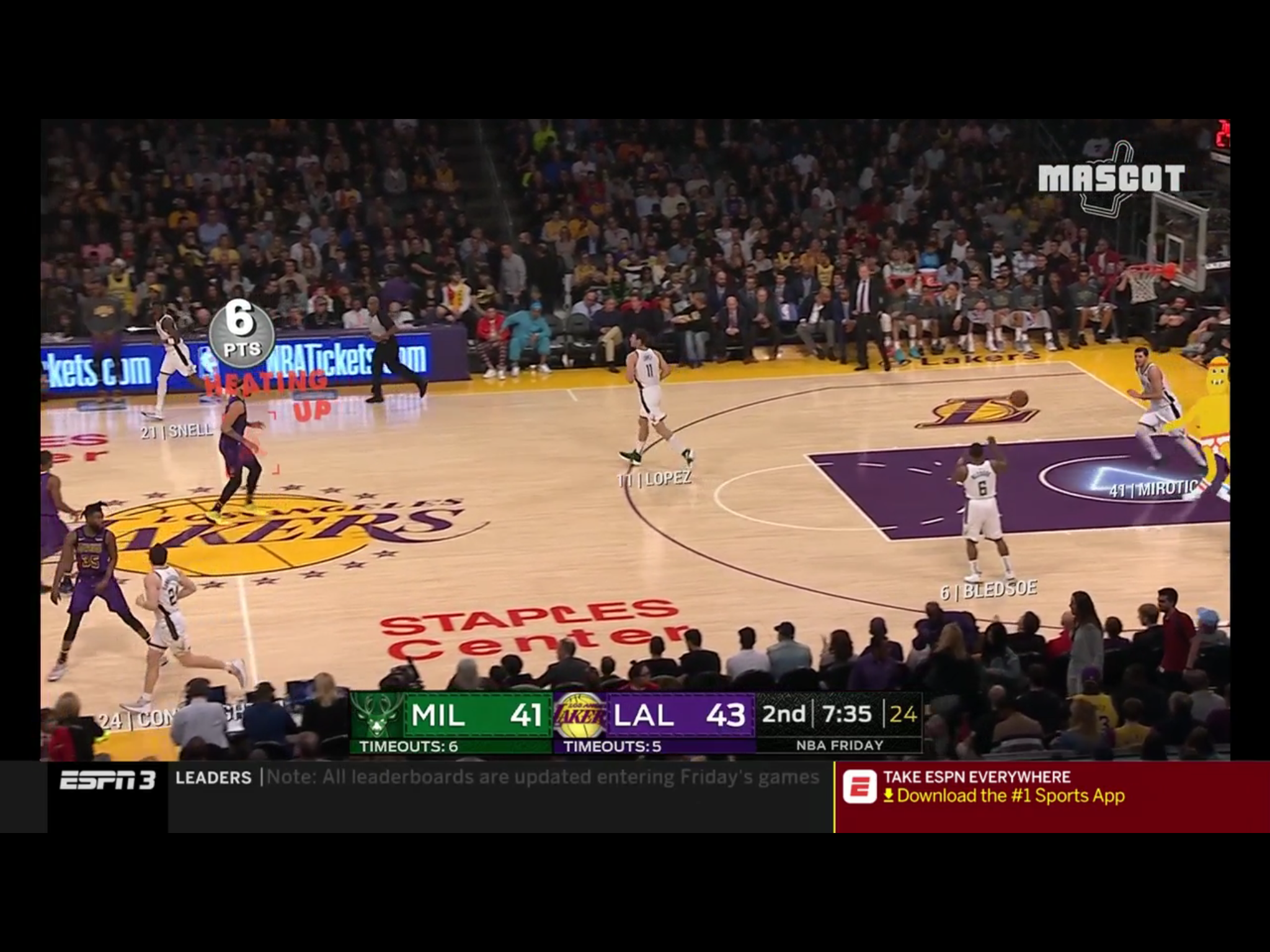
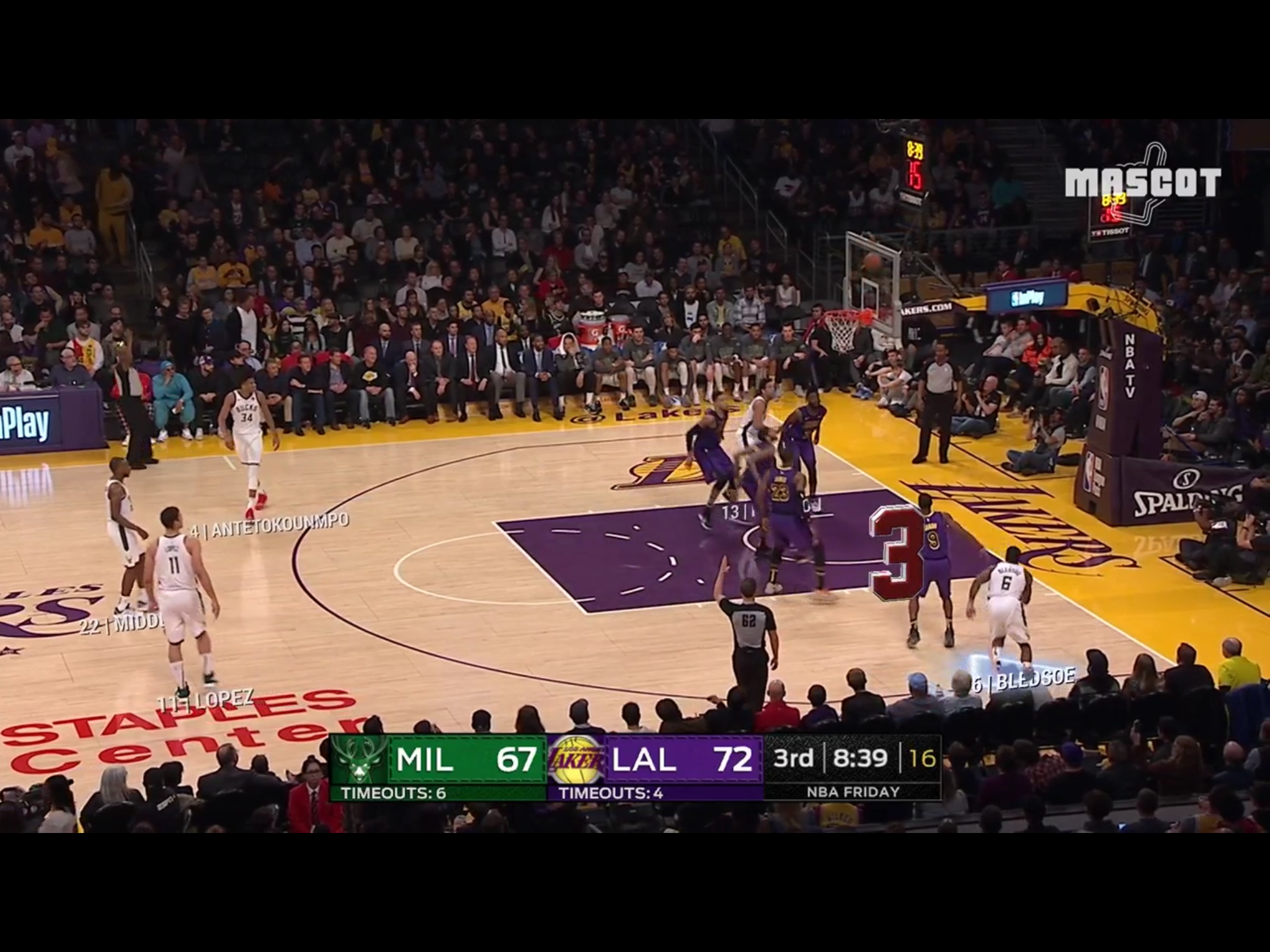
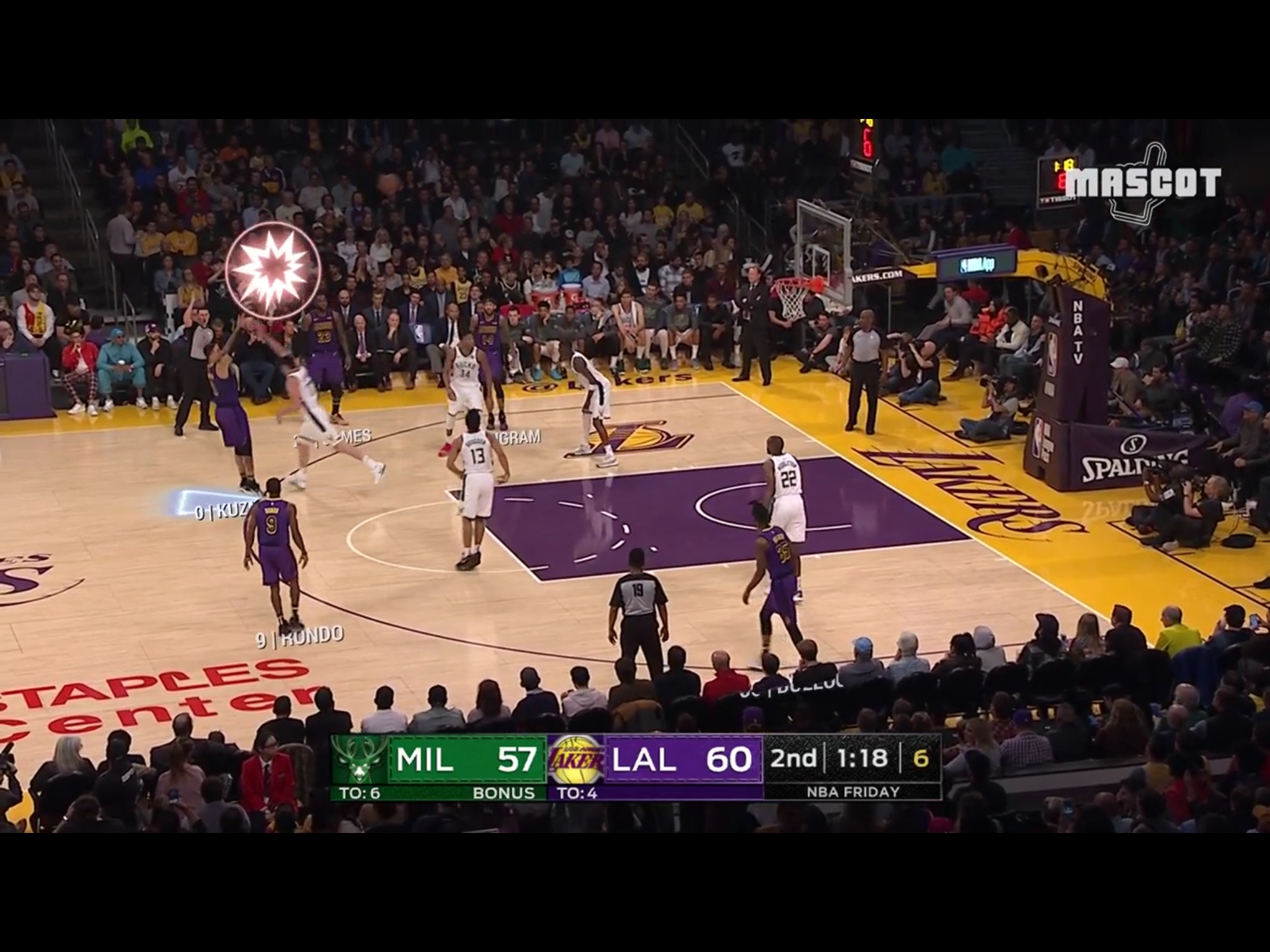
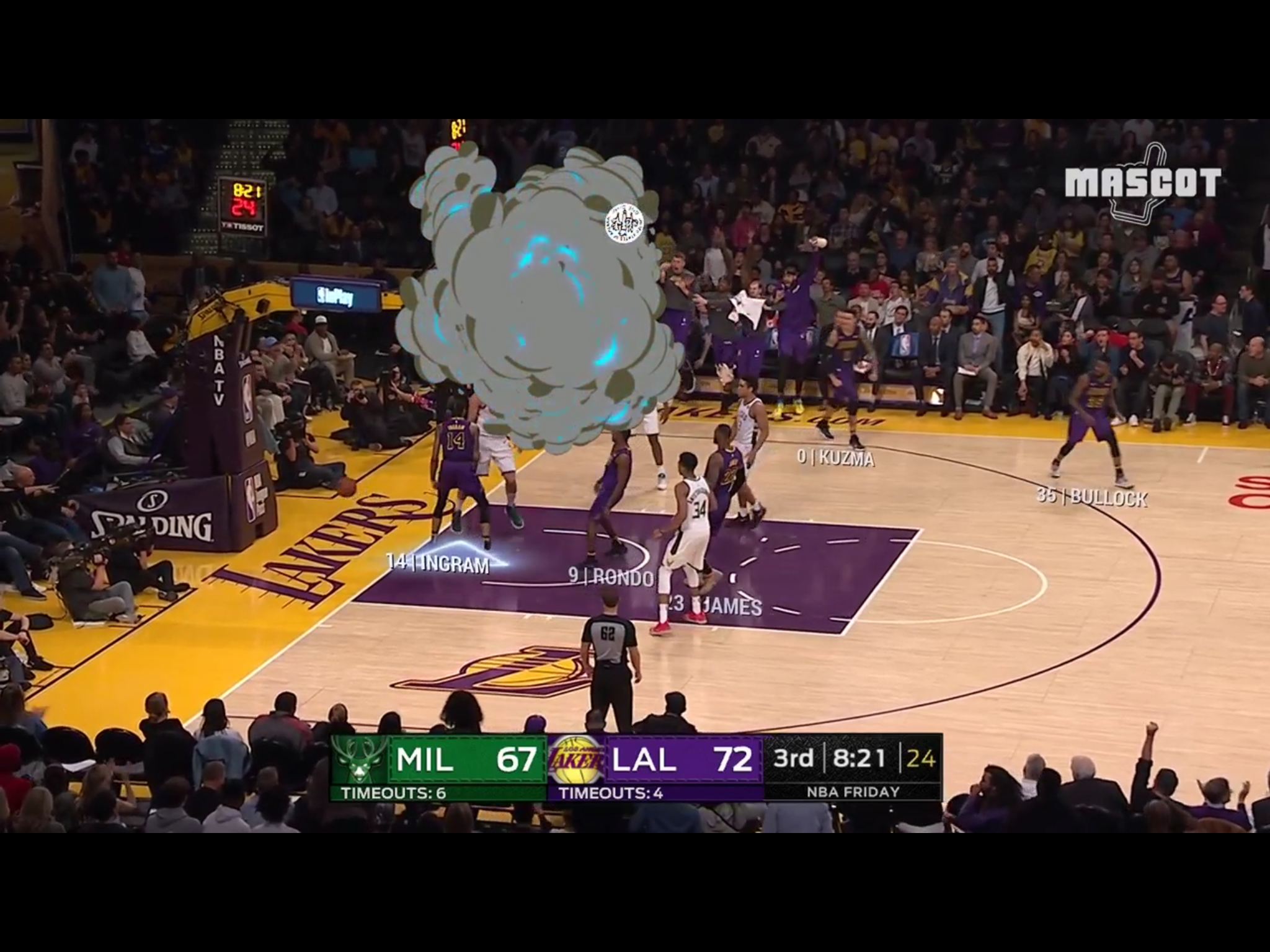
Stephanie Druley, ESPN executive vice president, event and studio production stated, “We’re excited to present a completely distinct and innovative way to watch a highly-anticipated NBA game to fans. There are several ways to tell the story of a basketball game, and through this collaboration with Second Spectrum, and the great work of our production team, we can offer new ways to reach all NBA fans.”
As Stephanie mentioned, this is a new and innovative way to watch games, and usually when you try out new things for the first time it brings for some challenges. There were a few hiccups during the game that could’ve knocked some people the wrong way. The broadcast went out a few times with technical difficulties, so I had to restart it by changing the mode to get back to the game. I also tried to switch to my iPad into portrait orientation to view the statistics of the game, and it cut off the entire right side view of the court.
Nonetheless, the overall experience is one that will not only transcend sports but will be seen across many live broadcasts across the globe. The way we watch live sports will be a thing of the past, and we will now watch sports in the future as if we were playing a video game. This is great for beginners to a brand new sport. This is supportive for players and coaches to learn and improvement their game. This is entertaining for the fans who love to watch the game. This is a beautiful example of immersive experiences!
Second Spectrum deserves a huge amount of credit for putting together a fantastic team to actually make this a reality. Not only do I think this is the future of sports but fans have spoken about the experience as well. People are beginning to take notice of how powerful this innovative solution can be in many different use cases. Fans on Twitter are loving the new data overlay. They want to see where this will take us in the future and so do I.
Fans talking about the new viewing experience with ESPN x Second Spectrum:
Immersive Experiences are Coming...

Just about 20 years ago, desktop computers were selling like wildfire, and the internet was booming. Then a few years later everyone had smartphones that had access to the internet. If someone decided to order food for delivery in the early 2000s, then they would have to call the store and make an order. Now, there are apps like DoorDash and Postmates that grant people an end to end experience of viewing the menu, placing their order, and visibility into the items being delivered. Life as we knew it changed right before our eyes, and it will do it again.
Currently, examples like DoorDash and Postmates show that consumer behavior is changing rapidly and it is shifting to more personalized experiences. Resulting in businesses and institutions to look at these experiences through two main lenses which are the user experience (UX) and the customer experience (CX).
User experience is the way users interact with a product, website, app, or service. Some elements of UX can be defined as the usability, the way the information is displayed, and the intuitiveness of the app. The purpose of UX is to meet the end users needs and provide them with delightful experiences.
Customer experience is a more holistic view of a customer's journey and their touchpoints with the brand. The purpose of CX is to meet end users needs with a consistent brand experience throughout every interaction with the business.
Think about the last time you used or bought a product or service. What was the experience like for you? Did an advertisement catch your attention? How was the sales process? If you had any questions or issues, were the customer service associates able to provide excellent customer support? These are the times when people decide how they would like to spend their precious time and money.
The most significant distinction between CX and UX is that UX is just one element of CX. Customer experience is the many different touchpoints along the customer journey, and each touchpoint has its own user experience tied to the brand.
Many companies try to complement their CX with great UX principles, but most companies don't do it better than Apple. Apple has built its business around the focus of having a great user experience no matter where you are in your customer journey of their brand. Whether you are looking at products online or purchasing a product in the store, the user experience is set to the highest standards. This enables the Apple brand to have a robust end-to-end customer experience. More recently, the company put a stronger emphasis on the CX by making an unconventional branding push to call their stores "Town Squares."
Apple Stores get a tremendous amount of traffic, and it is a primary channel for revenue generation. Not only is it suitable for revenue generation, but it is perfect for building relationships with their customers. The idea of calling Apple stores "Town Squares" is a unique way to cater to the customer experience by creating a community that consumers can do work, learn and have fun.
If Apple is the cream of the crop for CX + UX in today's businesses, then imagine the future. More likely than not people will experience life in a brand new way in the next ten years. The typical things we do like walking down the street with our dog, shopping with friends, cooking for your family or even at a concert of your favorite music artist will all have brand new experiences.
I predict the next significant shift will be immersive experiences becoming ubiquitous. An immersive experience is an imaginary environment that completely surrounds you such that you feel that you are inside it and part of it. The way in which these experiences are designed is entirely different, and require a new level of complexity. We are still in the early stages of exploring what this means for society.
I expect to see a mixed reality that might only be thought of in sci-fi films. Many of the breakthrough technologies like artificial intelligence and IoT will merge to create innovative approaches to experiencing the world. The capabilities that 5G will bring to our networks, the billions of sensors that will be connected to almost every aspect of our lives and the availability of virtual & augmented reality are coming.
Examples of immersive experiences are already available like watching an NBA game in a VR headset and the most popular of all, Pokemon GO! Picture an immersive experience at work while being a car mechanic and having a digital layer to diagnose problems, give part information, and guided repairing.
Of course, it can be a bit interesting to think of adding a new layer to the life we currently live in, and that is why we need to begin to look ahead to better prepare ourselves for what is to come.
Comment below and share what immersive experiences you think will enhance our daily lives in the future? If you need some inspiration check out this blog by AT&T.